
Code-switching
And how translanguaging connects us

This week we’ll delve into the mechanisms of multilingual communication, by exploring the phenomena of code-switching, translanguaging and style shifting.
Whether we realise it or not, most of us code switch on a regular basis. At its core, code-switching refers to the use of more than one language “a single communicative episode”.
I grew up in a multilingual household, so code-switching was a common, if not frequent, occurrence. I still remember the Malaysian Chinese aunties at my Taoist temple arguing in a beautiful blend Cantonese, Mandarin, Hokkien, Malay and English.
It wasn’t until I left home did I realise how surprised some people are with mixing and blending different languages and language varieties together. If you live in Aotearoa New Zealand, then you would’ve come across code-switching between English and te reo Māori.
As an excuse to introduce my other interests – trains - here’s an example I heard recently while on a train home to Te Awakairangi ki Tai Lower Hutt:
“Nau mai, haere mai and welcome to this Metlink service to Upper Hutt […] Kia ora and thank you for travelling with Metlink.”
This is what we call intra-sentential code-switching when code-switching occurs within a sentence. Some people might call this ‘borrowing’ from one language into another.
This is not the only type of code-switching in our everyday environment. We frequently observe inter-sentential code-switching such as this announcement on the Southern Line service to Ōtāhuhu where the announcement was made in English and then immediately followed by te reo Māori.
“We are now arriving at Ōtāhuhu.”
“Ko Ōtāhuhu te tūna tereina e heke mai ana.”
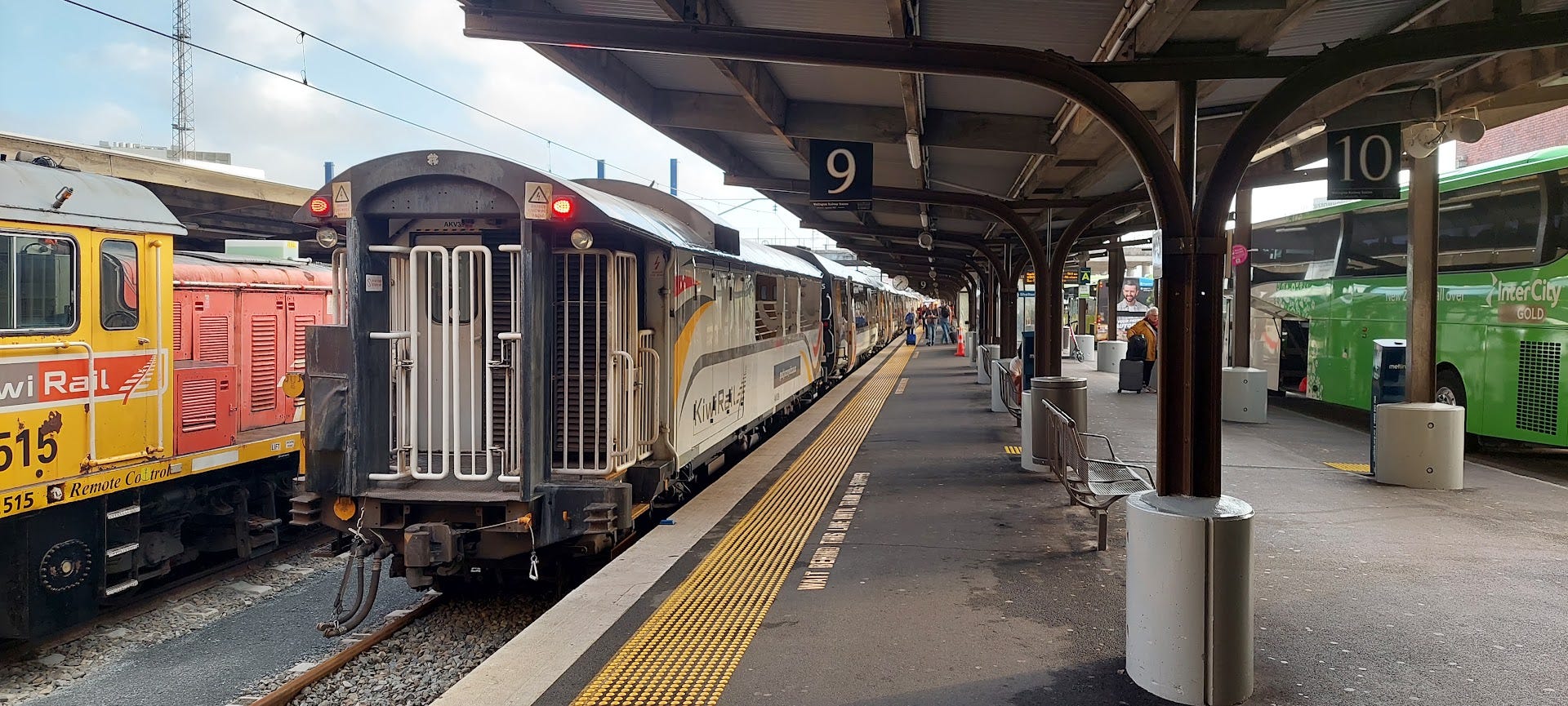
Of course, code-switching is not only confined to public transport announcements, but we see it in everyday life as well – at home, at work, and even in this passage right now.
People might code-switch to signal a change in activity, topic, or participants (situational code-switching), but people may also choose to code-switch for a raft of other reasons when they quote someone in another language or for affective or identity reasons (conversational code-switching).
Therefore, code-switching is a social function useful in communication. Not only that, code-switching is not just confined to switching between languages.
This is because the boundaries of where one language ends and another begin is not well defined. Some researchers consider the style-shifting as a form of translanguaging. This is because individuals use this as a strategy to respond or initiate change in a linguistic situation.
For example, someone may choose to code-switch between different varieties of New Zealand English (Māori English, Pasifika English, Southland English, North Shore English etc.) to express a particular identity. We see this frequently in comedy.
Unfortunately, a common language myth about code-switching is that it is a bad habit and a sign of incompetence in a target language. There is a growing body of research which suggests code-switching as pedagogical practice can improve inclusion, engagement, and positive relationships between children.
We can use code-switching strategies to support language learning. This example came up while I was in a conversation group with other te reo Māori speakers and learners.
“Āe, i interview ahau ngā applicants mō ēnei mahi. Aroha mai, he aha ngā kupu i te reo Māori mō interview, applicants rānei?”
By code-switching between te reo Māori and English, it allowed me to practice my reo with the linguistic structures I have access to without interrupting the flow of my speech.
Despite the benefits of code-switching, we need to acknowledge the etiquette of code-switching. Depending on kawa for some hapū, it wouldn’t be appropriate for kaikaranga or kaikōrero to use English in karanga or whaikōrero during pōwhiri. We can save that over kaputī (cup of tea) after the formalities of pōwhiri.
Other instances where code-switching is not appropriate will depend on the language policies of a particular speech community. This is particularly true in immersive language teaching in language revitalisation programmes.
Because so much of our early research were conducted on the assumption that monolingualism was the norm, we are only beginning to fully understand the processes of code-switching and translanguaging. What else might we discover if we begin to normalise code-switching and translanguaging communicative practices in our policies and research.
Note: So far, I’ve only talked about code-switching as a positive phenomenon, but outside of linguistics it describes the process where under-represented or marginalised people modify their behaviour (e.g., speech, appearance, or behaviour) to assimilate with a dominant group. Often this dominant group occupies a position of power. This is why we need to be clear with technical terminology as it may mean something else in a different sociocultural context.